
Back Country Summer 2020
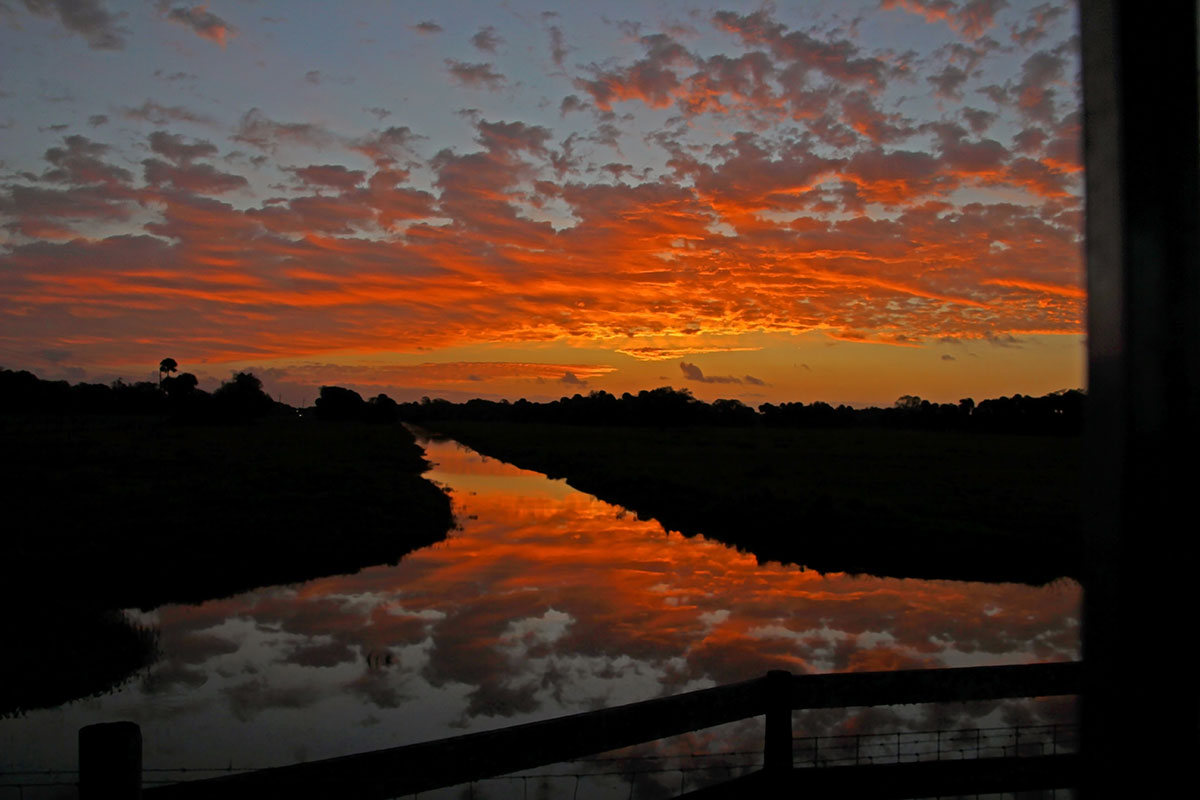
Sunrises on Adams Ranch west of Fort Pierce take on spectacular hues because of a lack of city lights. Soon, the sun will light treetops, birds will start their calls, wild hogs will head to the swamps, cows will pair up with their calves, horses in the pasture for the night will head to the barn for a day’s work. A great day is starting.
Back Country by Robert Adams – Spring 2020
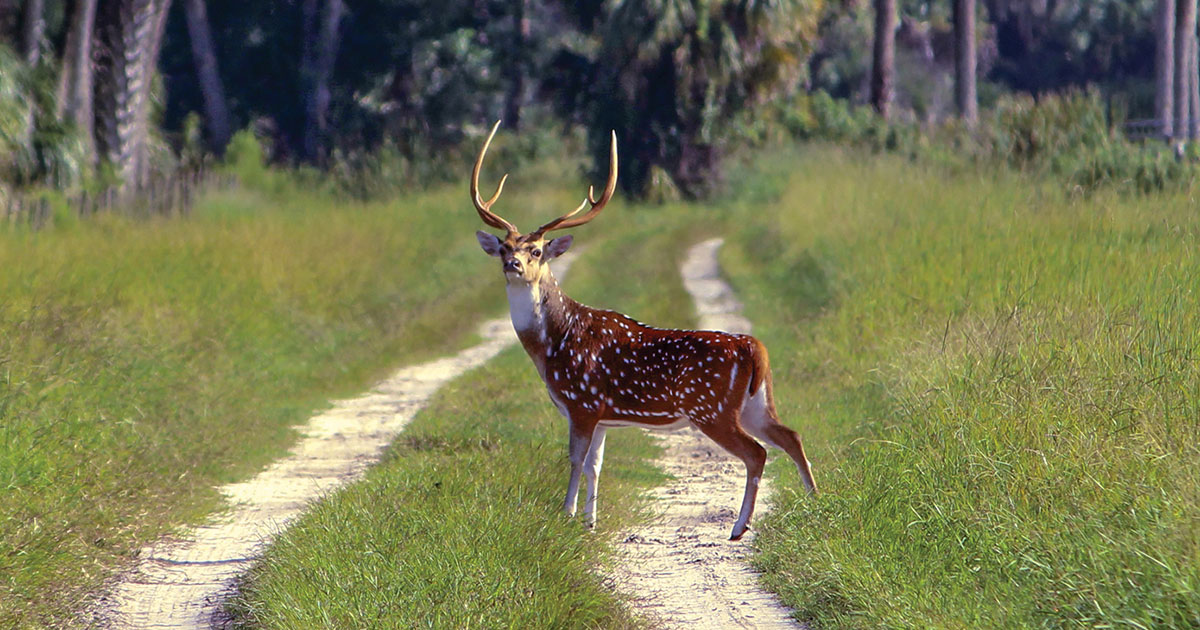
A defiant axis deer stands in the road after leaving a thick oak and palm hammock. The deer is a native of India and was introduced to Texas in 1932 and today can be found in Florida, Alabama, Mississippi, California and Hawaii. The deer have spots all their lives.
Back Country by Robert Adams – Winter 2020
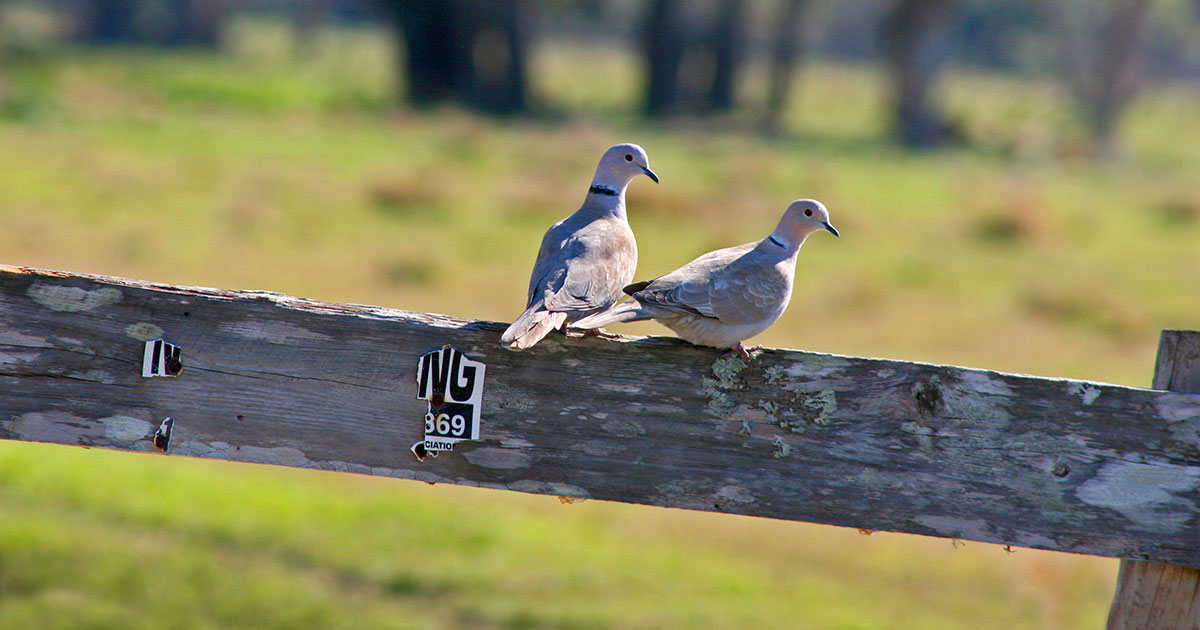
Eurasian collared doves wait for feeding time on a gate at Adams Ranch west of Fort Pierce. The birds feast on the same grain eaten by the horses. Native to Europe and the Bahamas, the species spread to Florida in 1989 and is now found in nearly every state in the United States. The birds are named for the black collars around their necks.
Back Country by Robert Adams – Holiday 2019
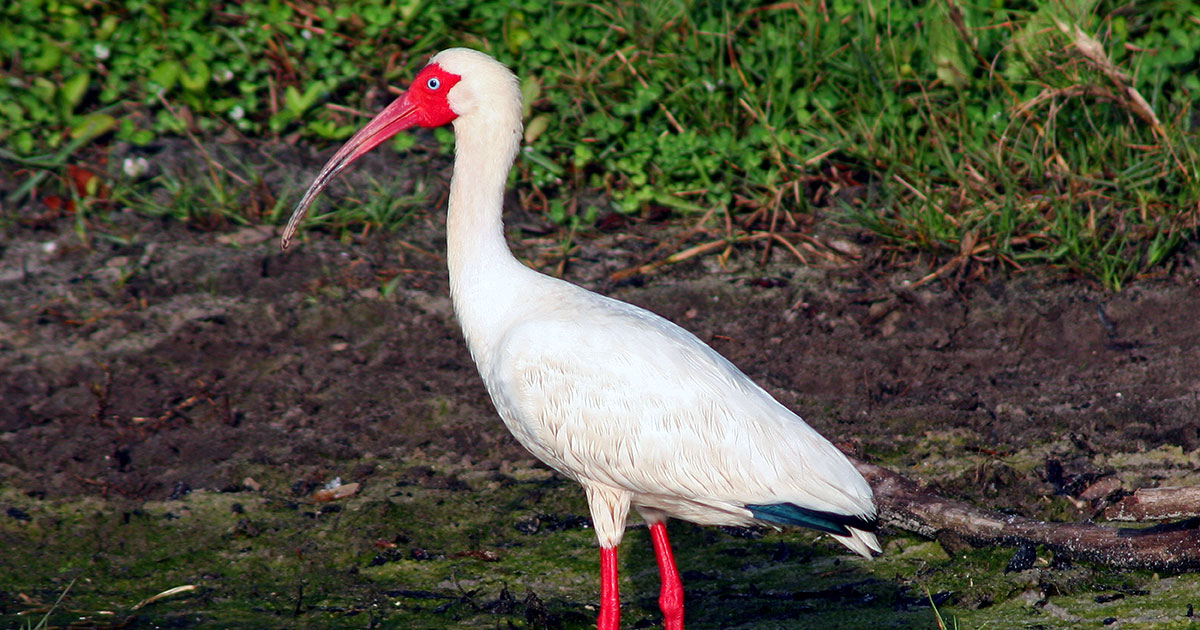
An American white ibis wades among other birds looking for a meal of crayfish, small fish and aquatic insects. During mating season, the ibis’s bill and legs turn from light pink to crimson red, like this one. The American white is the most commonly seen ibis in Florida.
Back Country by Robert Adams – Fall 2019
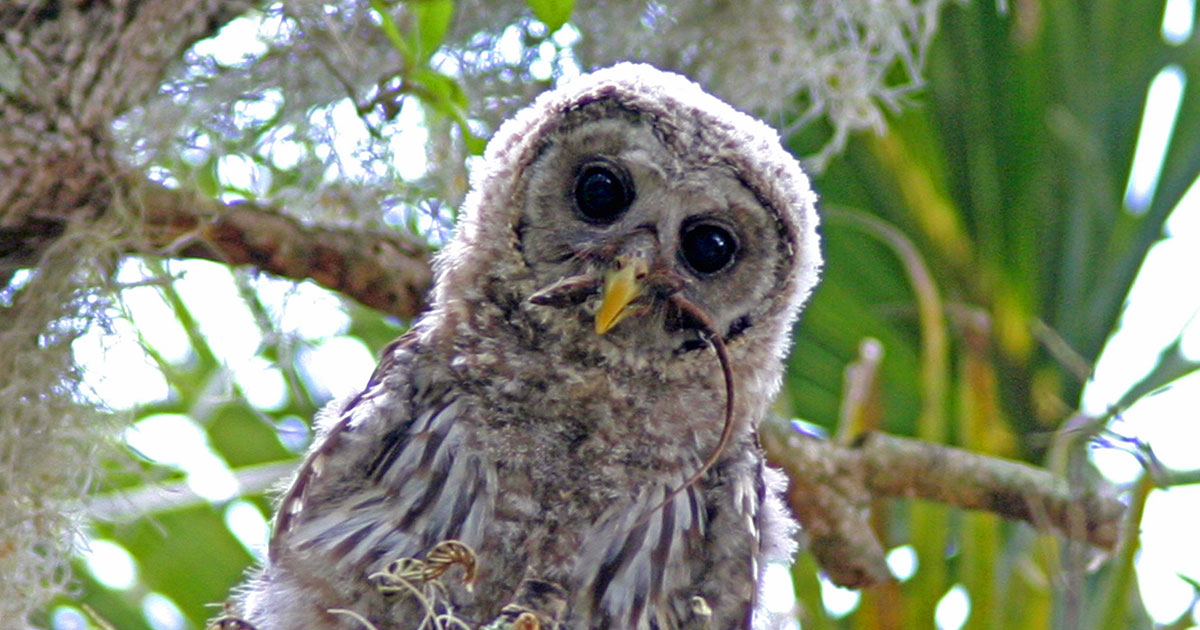
Deep in the hammock, an adult barred owl sits on an oak tree limb with a fresh catch of lizard or “green anole.” Soon, its baby flies out of its nest and lands next to the adult, taking the lizard to eat. This is an example of how nature takes care of its young to continue the species.

Back Country by Robert Adams – Winter 2019
A common snapping turtle (Chelydra serpentina) crawls in the sand to lay her eggs, making a rare appearance on land. Snapping turtles can grow up to 35 pounds in the wild with reports of some being as large as 85 pounds. This one, about the size of a small dog, weighs about 12 pounds. Snapping turtles have powerful jaws, sharp claws, a long tail and long extendable neck used for catching prey. Their only enemies are man and alligators. They are important aquatic scavengers, but they are also active hunters, feeding on frogs, fish, insects, snakes, birds and small mammals.

Back Country by Robert Adams – Spring 2019
While the sun rises, a freshwater diving bird known as a grebe swims and feeds on insect larvae, tadpoles and small fish. This one is making wild tropical sounds like from a jungle movie. Unlike ducks, they do not have webbed feet — just wide toes. Also unlike ducks, these small shy birds do not gather in flocks and can dive to depths up to 20 feet. Ducks are dabblers and grebes are divers. If they sense danger they will quickly dive and reappear in a safer place. They can be found from Canada to Argentina.
Back Country by Robert Adams – Summer 2019
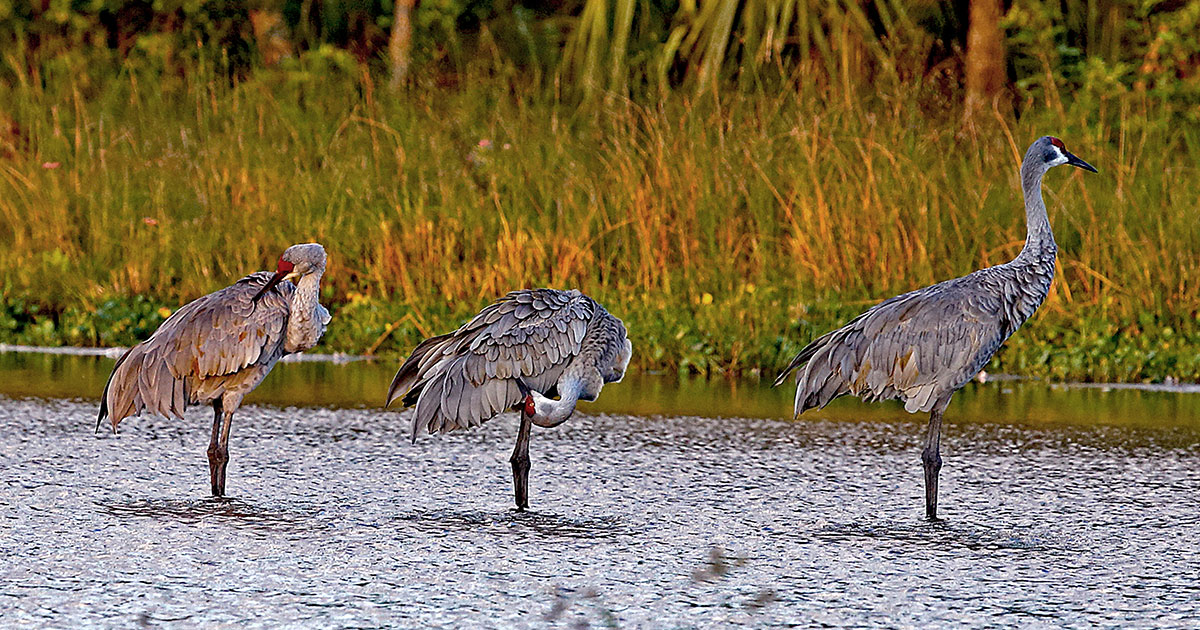
Late in the afternoon, sandhill cranes land in the shallow water of a sand pond to roost for the night. Later, ducks, ibises, wood storks and herrings will join them. The middle bird is a young crane almost ready to leave his parents. They have been in the fields all day hunting for insects, seeds, small mammals and small snakes. They are busy preening their feathers; most birds do this twice a day. The water protects them from predators at night.


