
RoboDocs

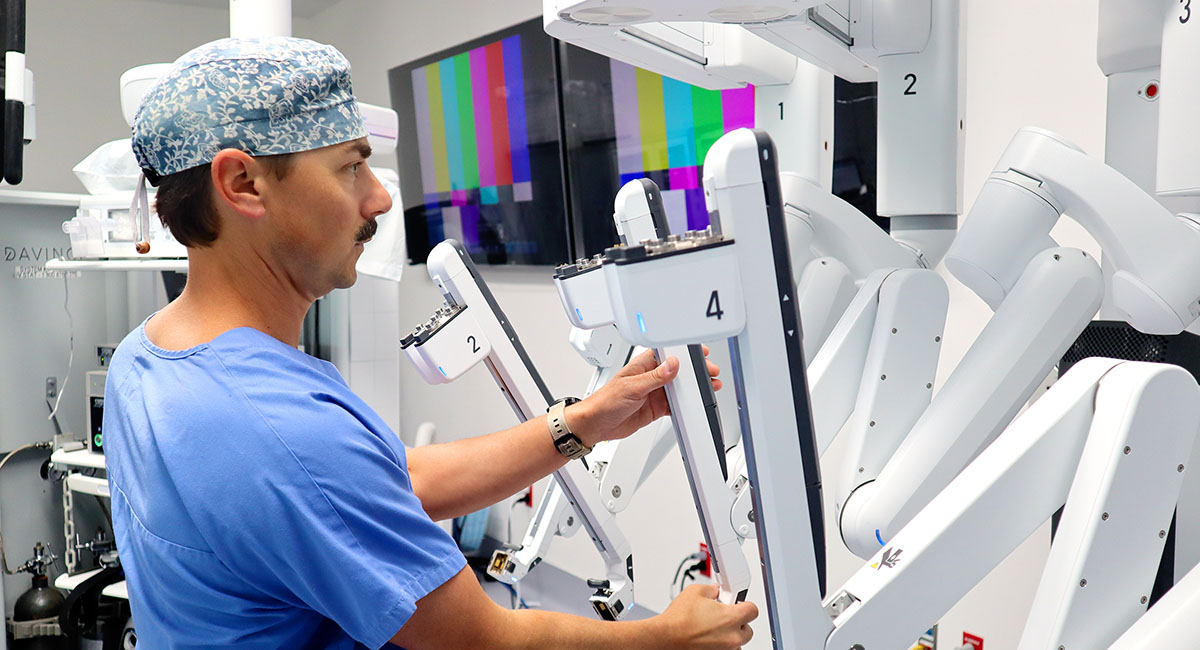
Cleveland Clinic Tradition’s Dr. Eric Owings demonstrates the four robotic arms on the da Vinci Surgical System. ELLEN GILLETTE

Healing hands team up with robotic arms in new age of surgery

BY ELLEN GILLETTE
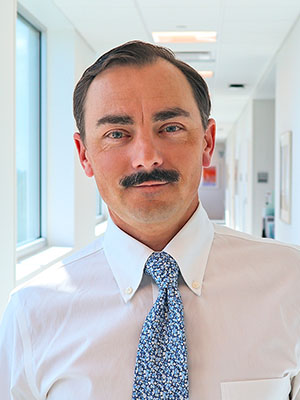
Owings prefers robotic surgery but says doctors still need to be trained to use other methods.

Robotic surgery still sounds like science fiction, but it was approved by the Food and Drug Administration a quarter of a century ago. It was the culmination of more than 100 years’ worth of innovations that began with experiments using lighting and instrumentation. 

After the invention of the computer chip, laparoscopy become well known and often used. Both diagnostic laparoscopy and laparoscopic surgery use a tiny camera that allows a doctor to see internally. Laparoscopy is similar to robot-assisted surgery, in that there are reduced risks compared with traditional, or open, surgery. But robotic techniques represent a big technological leap forward. During a laparoscopic procedure, the surgeon directly controls the surgical instruments, assisted by a computer monitor that provides a real-time, internal view. With robotics, the doctor sits at a console some distance from the patient, using a 3-D monitoring device and controlling four robotic arms. Other staff stay by the operating table.

Cleveland Clinic and HCA hospitals use the da Vinci Surgical System, named for 16th century artist and inventor Leonardo da Vinci, who created astonishingly accurate drawings of human anatomy. The system has been peer-reviewed in close to 40,000 medical articles and has made 14 million procedures possible.

Robotics training is still not included at all medical schools, but, according to Dr. Eric Owings, chief of surgery at Cleveland Clinic Tradition, it is increasingly integrated into university curricula. Da Vinci’s manufacturer Intuitive conducts its own rigorous certification program. Dr. Joshua Hagan, an acute care surgeon, is one of 12 surgeons at HCA Lawnwood in Fort Pierce who are certified for the da Vinci. “Initially, an Intuitive representative is there to answer questions and to help the newly trained feel fully supported. It’s a very involved process.” 

HCA Healthcare has invested heavily in robotics, making it one of the world’s largest operators of da Vinci and other systems. Vincent Postiglione, director of communications and community involvement for HCA St. Lucie in Port St. Lucie, says that HCA has escalated its focus on minimally invasive procedures since 2018. Ranked #1 in Florida for joint replacement by Healthgrades, its doctors use several different robotic systems for precision, minimized tissue disruption and faster rehabilitation. 

HCA St. Lucie added Intuitive’s latest model, the da Vinci 5, this year. “This technology is a game-changer,” said Dr. Adam Kurtin. “[It] helps us provide the best possible outcomes with better imaging of the surgical field, with a new kind of feedback on the controls. I can feel tension on the smallest areas of tissue to make cuts and sutures even more precisely.” 

THE PROPER METHOD

Dr. Paulette Griffin says patients are doing well with new, minimally invasive gynecological procedures. CLEVELAND CLINIC

While the idea of robots poking around inside our bodies may take some getting used to, facts dispel fears. Patients should learn as much as possible about their options because they are the decision-makers. Doctors diagnose and recommend treatment, but only patients — or their healthcare surrogates — can give the green light. 

When robotic surgery is an option, rest assured: Regardless of the type of surgery, robots do not loom over a sleeping patient. Robotic movement is controlled entirely by the surgeon. Think of it as a highly advanced scalpel in the surgeon’s hand.

Robotic surgery is at the top of Owings’ list of preferred methods. “There are tools in our toolbox for specific problems. Sometimes we need the traditional, open approach. Sometimes we do laparoscopy. But robotic surgery gives us better dexterity.”

During laparoscopy, someone holds the camera while the doctor uses long instruments in both hands. “For straightforward, simple operations like an appendectomy that typically don’t take very long, laparoscopy is efficient,” Owings said.

Robotics is superior for some of the more complex surgeries. “The robots have evolved over the last 20 years or so and become more user friendly. It’s more convenient to be able to set up the operations now,” Owings said. “The ergonomics — where I’m sitting and operating — is a lot more comfortable. It’s easier on my body than a lot of standard laparoscopy or open surgeries.

“My attending surgeon told me, ‘If you can’t see it, you can’t do it.’ The camera that comes with the robot gives a nice, stable platform with great visibility.”

Dr. Paulette Griffin, who practices at Cleveland Clinic Tradition Hospital and Family Health in Stuart, points out that some surgeries still necessitate open surgery. “It’s not common, but sometimes there are massive fibroids; sometimes there’s concern for potential cancer.” 

In those cases, there’s a trade-off: The patient can’t return to regular activities as quickly as with robotic surgery, but it is more beneficial in the long run. Patient care is always the priority.

HCA has invested heavily in robotics, including this latest da Vinci model, operated by Dr. Adam Kurtin, second from left, and his surgical team at HCA St. Lucie, which is used for a wide range of minimally invasive procedures. HCA ST. LUCIE

BETTER OUTCOMES

With minimally invasive techniques like robotics, incisions are a fraction of the size needed for traditional operations, with less chance of infection. This kind of precision can also mean a speedier recovery as well as reduced blood loss, scar tissue and pain. Shorter hospital stays can lower the risk of hospital-acquired infections.

It doesn’t require less time in the operating room, however. “The surgery doesn’t take less time, because we are able to do more complex procedures,” Owings said. “But the patient recuperates faster.”

Sometimes the benefits are even more profound. One of Hagan’s patients with diverticulitis was looking at laparoscopic surgery, followed by a colostomy bag for waste removal. “He was very appreciative that he could avoid that with [robotic surgery],” Hagan said. “He was only in the hospital for a couple of days.”

The da Vinci system is controlled by surgeons at a separate computer console. ELLEN GILLETTE PHOTOS
Doctors train extensively before performing robotic surgeries that require not only hand-eye coordination, but footwork as well. ELLEN GILLETTE

LOOKING AHEAD

Although traditional, open surgery may still be necessary, Dr. Josh Hagan at HCA Lawnwood says about 85% of his procedures are now performed robotically. HCA LAWNWOOD

As a new generation of surgeons becomes more robot-dependent, Owings foresees a possible problem. “You still need the ability to do open surgery, to do laparoscopic,” he said. “You can’t just rely on robots, but it is an amazing tool.”

According to Hagan, “It’s important that misconceptions are cleared up because [robotic surgery] is here to stay.” He believes that medicine will see even further advances with artificial intelligence that will improve access in underserved areas. “Probably in the next 10 years, we’ll see AI-assisted surgeries with very little guidance from the surgeon.”

Technology is only getting better. One recent innovation is Intuitive’s Telepresence Platform, which allows virtual access to operating rooms during robotic-assisted procedures from other locations, even other countries. Not only can doctors improve their skills this way, but experts can offer valuable input.

“I don’t think there’s going to be a time in the near future that you’re going to be able to replace a surgeon with a robot,” Owings said. “You have to have good hands — good training — to be able to maintain your composure in the OR.”

Hagan believes humanity and technology enhance one other. “Robotic arms don’t fatigue, but humans will always want human connection,” he said. “Robotic surgery is the perfect marriage of physicians and technology.”

So take heart, parents who worry their kids spend too much time manipulating joysticks for video games: You may just have a budding surgeon in the house.

See original article in print publication

Sept. 2026


Please follow and like us: