
RoboDocs
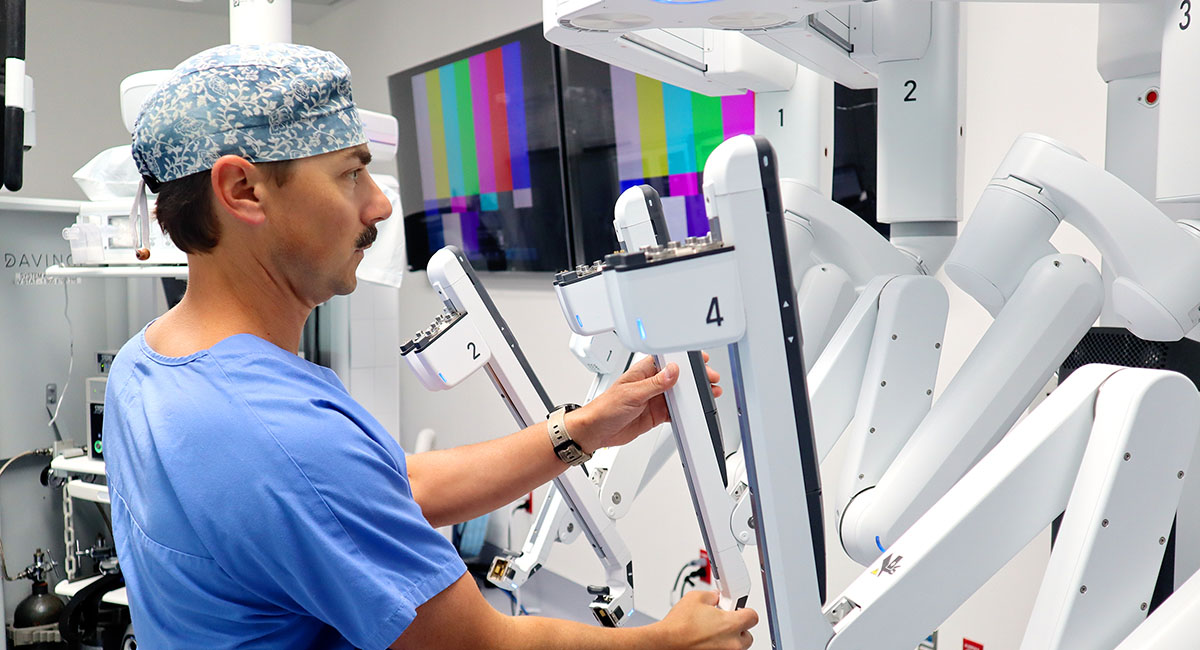
Healing hands team up with robotic arms in new age of surgery
BY ELLEN GILLETTE

Robotic surgery still sounds like science fiction, but it was approved by the Food and Drug Administration a quarter of a century ago. It was the culmination of more than 100 years’ worth of innovations that began with experiments using lighting and instrumentation. After the invention of the computer chip, laparoscopy become well known and often used. Both diagnostic laparoscopy and laparoscopic surgery use a tiny camera that allows a doctor to see internally. Laparoscopy is similar to robot-assisted surgery, in that there are reduced risks compared with traditional, or open, surgery. But robotic techniques represent a big technological leap forward. During a laparoscopic procedure, the surgeon directly controls the surgical instruments, assisted by a computer monitor that provides a real-time, internal view. With robotics, the doctor sits at a console some distance from the patient, using a 3-D monitoring device and controlling four robotic arms. Other staff stay by the operating table.


You cannot copy content of this page


